
New York Counties Collaborate on AI Dashboard

As part of a local public safety initiative in her community, Dutchess County Legislator Alix Winsby asked her constituents to weigh in with proposals for crosswalks needed to enhance pedestrian safety on local streets.
Fielding dozens of responses, Winsby said she decided to use a Generative AI tool to analyze the input she received from the public.
"It allowed me to format in a way so I could put it into a community development block grant application," the newly elected county official said. “It was a way to turn that constituent outreach into usable data."
Across New York, hundreds of county government officials and staffers are finding ways to harness the potential of Artificial Intelligence in their day-to-day operations.
A just completed AI and GenAI Productivity Survey by the New York State Association of Counties in partnership with Computer Aid, Inc. (CIA) found that 63 percent of respondents (188 out of 293) have been actively using at least one Generative Artificial Intelligence tool. The leading choice in that group has been ChatGPT, with 79 percent of active users going with that particular tool.
Significantly, 77 percent of the active users signaled they are experiencing time savings. Nearly a quarter of them said AI saves at least three hours of labor each week.
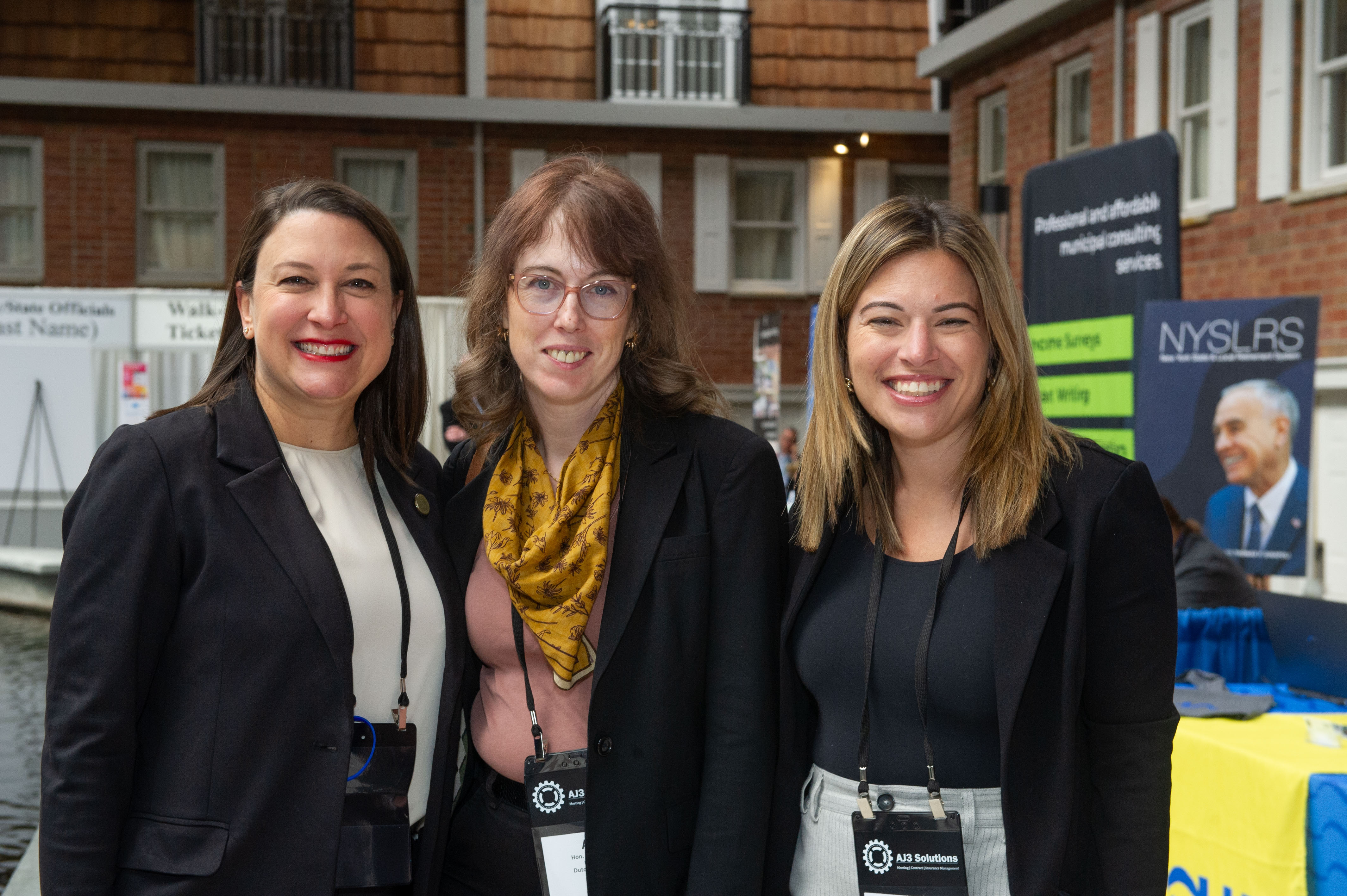
[Gen AI] was a way to turn that constituent outreach into usable data
But the survey also showed that AI adoption does not come without concerns. Among the concerns listed by the survey respondents were accuracy risks, confidentiality issues and the need for more training.
"A critical gap exists between policy creation and workforce training," the productivity survey concluded. "While counties have AI policies, training delivery lags significantly."
The survey results became a springboard for discussion at a workshop held this month at NYSAC's annual Legislative Conference -- "Evaluating AI with a County Purpose: Through Data, Trust, and Innovation."
The workshop explained the benefits of the fledgling NYSAC AI Trustmark Dashboard, an online evaluation matrix designed to assist counties in making informed AI decisions together through the sharing of assessments regarding costs, security, ease of use, risk factors and data protection.
The dashboard grew out of the efforts of the NYSAC AI Advisory Group. That group is led by Mark LaVigne, NYSAC's deputy director; Rita Reynolds, the Director of Public Sector at CIA; and Megan Novak, legislative coordinator at NYSAC.
The group members include:
- Daniel Krebs, chief information security officer for Monroe County;
- Dylan Soper, deputy county administrator for Jefferson County;
- Kim Marie Moore, deputy director of ITS at Tompkins County;
- Lorne Green, commissioner and chief information officer for Sullivan County;
- Marguerite Bierne, chief information officer at Westchester County; and
- Steven Falitico, public communications and web design specialist for Genesee County.
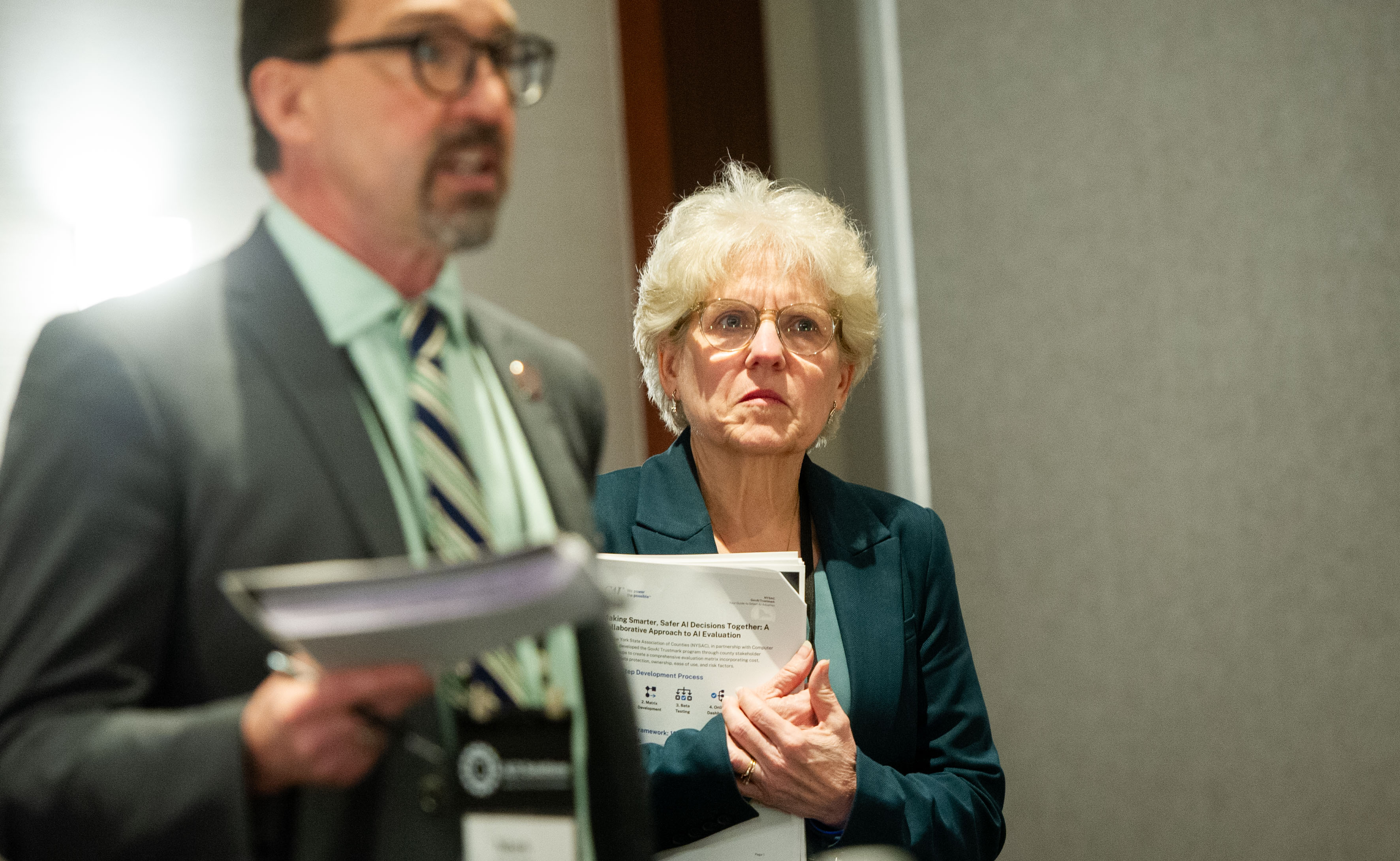
There is not another tool out there like this dashboard.
Reynolds said the online dashboard has been live now for about a month, and has been undergoing testing by work group members
"The goal here is to have a unified place where the New York counties can go and log in and see what tools other counties are using for AI, in different areas, such as productivity," Reynolds explained.
The matrix, she said, will help the counties assess such matters as ease of use, security concerns and how well the AI tools have been working for those that have been using them, reporting the experiences in a way that will allow all the counties using the dashboard to learn from the experiences of their counterparts across the state.
"It will help them guide their research and will benefit their county and improve productivity and also improve efficiencies without creating a huge cost impact," Reynolds added.
At the workshop, Reynolds said with the rollout of the dashboard, county governments will be having internal "team discussions" on using the matrix. "You need department directors, you need county administrators and you need elected officials to weigh in on some of the areas."
"There is not another tool out there like this," she said of the dashboard.
The AI group wants to eventually evaluate AI transcription tools but is holding off for the time being due to legal entanglements centering on privacy and security.
The fact that NYSAC "has been a known and trusted" entity for generations of New York county leaders provides today's crop of county officials with confidence in the dashboard that will guide the road they take in expanding their use of artificial intelligence.
The early indications from the survey that a number of counties have experienced efficiencies in productivity from using AI in the administration of services is notable, she pointed out.
Reynolds said NYSAC, along with its AI advisory group, is already planning to conduct a webinar for representatives of counties to explain the goals of the dashboard.
Each county is expected to have a staff member who can submit evaluations that can be viewed by the participants from all of the counties and will be able to add colleagues from their counties as dashboard viewers.
Those who participated in NYSAC's conference workshop on GenAI expressed their support for the effort and stated that they are eager to move forward with the collaborative effort behind the emerging dashboard. Some of the AI tools to be evaluated included ChatGPT, Microsoft Pilot and Google Gemini.
Daniel Krebs, the chief information security officer for Monroe County, said the launch of the dashboard sets the stage for having a force multiplier for the adoption process for all New York Counties.
Counties will determine their own level of engagement with the AI tools being assessed. Offering an example, Krebs suggested: "It might be different for Monroe County than it is for Albany County."
"We all have to go through the same hurdles, we have to make sure we can afford it and we have to make sure it's secure," Krebs said. "And we have to make sure it's going to provide value — whether that's increasing efficiencies, decreasing costs or increasing value provided to the constituents.”
Contact Us
New York State Association of Counties
515 Broadway, Suite 402
Albany, NY 12207
Phone: (518) 465-1473
Fax: (518) 465-0506